
Two Beautiful Hand Screen Printed Sarees with Traditional Indian Motifs
Introduction:
I bought this maroon handloom cotton saree for my mother-in-law, as she loves wearing comfortable cotton sarees at home. The saree has a rich maroon base beautifully complemented by a copper-coloured border and pallu, giving it a simple yet elegant look.
Since I had some fabric paint left over from an earlier project, I thought it would be the perfect opportunity to give this plain saree a unique handmade touch. Instead of letting the paint go to waste, I decided to create traditional screen-printed motifs that would enhance the saree while preserving its understated elegance.
What is Hand Screen Printing?
Hand screen printing is a traditional textile printing technique in which designs are transferred onto fabric using specially prepared screens. Each screen is created with a specific design, allowing the pattern to be printed repeatedly with precision. Fabric colours are spread across the screen and pushed through the open areas using a rubber squeegee, transferring the design onto the fabric below.
Screen printing has been widely used in India for decorating sarees, dress materials, home furnishings, and other textiles. It produces clean, sharp designs and is ideal for both simple and intricate patterns.
Although hand screen printing and hand block printing are both popular fabric-printing techniques, they differ in their methods. In hand block printing, carved wooden blocks are dipped in fabric dye and stamped onto the fabric one impression at a time. In hand screen printing, the screen is placed over the fabric, the colour is poured onto it, and a squeegee is used to spread the paint evenly across the screen, creating a uniform print.
Today, many textile industries use automated screen-printing machines to increase production speed and maintain consistency. However, the basic principle remains the same as traditional hand screen printing—only the process has been mechanised. Both methods produce beautiful printed fabrics, while hand screen printing continues to be appreciated for its craftsmanship and artistic appeal.
Materials Used in Screenprinting
- Cotton/Silk blend saree (or the actual fabric)
- Fabric colors
- Hand screen
- Squeegee
- Printing table
- Colors-pigments, medium and fixers
First Saree – Traditional Design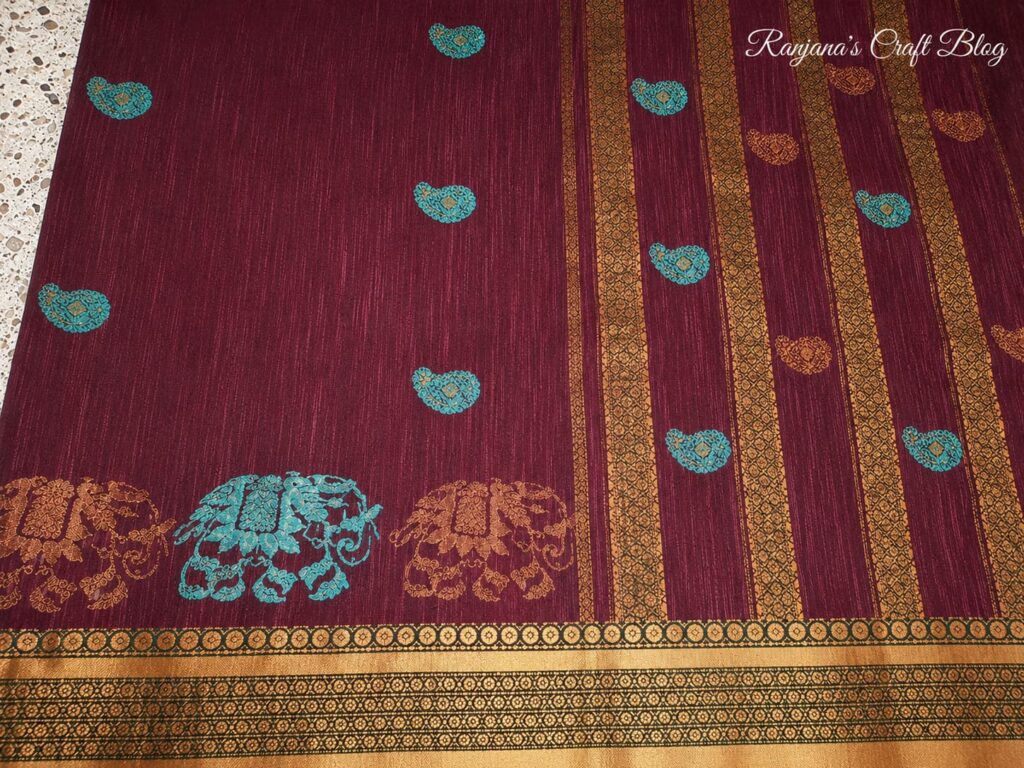
The saree with screenprinted motif
The First Saree – Traditional Elephant and Paisley Design
The first saree is a beautiful maroon cotton handloom saree with an elegant copper-coloured border and pallu. The rich maroon background provided the perfect canvas for traditional motifs, so I chose turquoise green fabric paint to create a striking contrast.
For the border, I selected graceful elephant motifs, while the body of the saree features classic paisley designs. Both motifs are timeless elements of Indian textile art and never seem to go out of fashion. To complement the saree’s original border, I printed the designs using a combination of turquoise green and copper fabric colours.
While the green colour turned out exactly as I had imagined, the copper shade appeared more subtle than expected. Sometimes metallic fabric colours do not show up brightly on certain fabrics, or it could simply be due to a lower concentration of metallic pigment in the paint. Whatever the reason, every craft project teaches us something new. I have made a note of this for my future screen-printing projects.
After all, every mistake is a step towards perfection, and practice is the key to mastering any art.
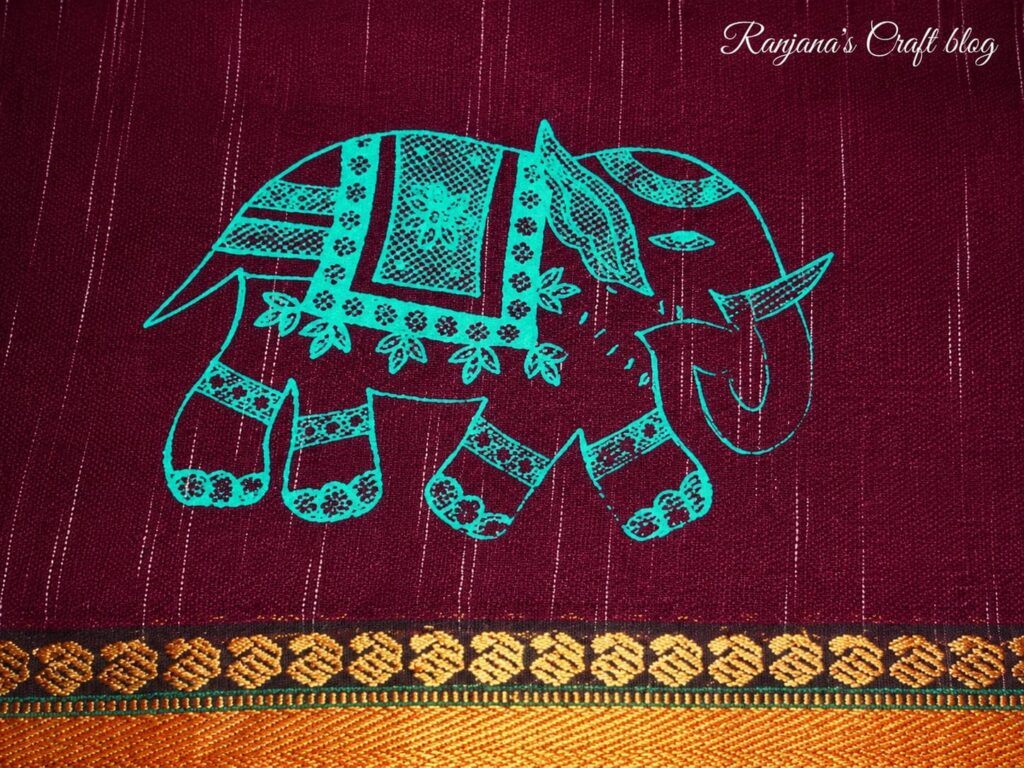
The beautiful elephant motif
Second Saree – A Traditional Peacock Makeover
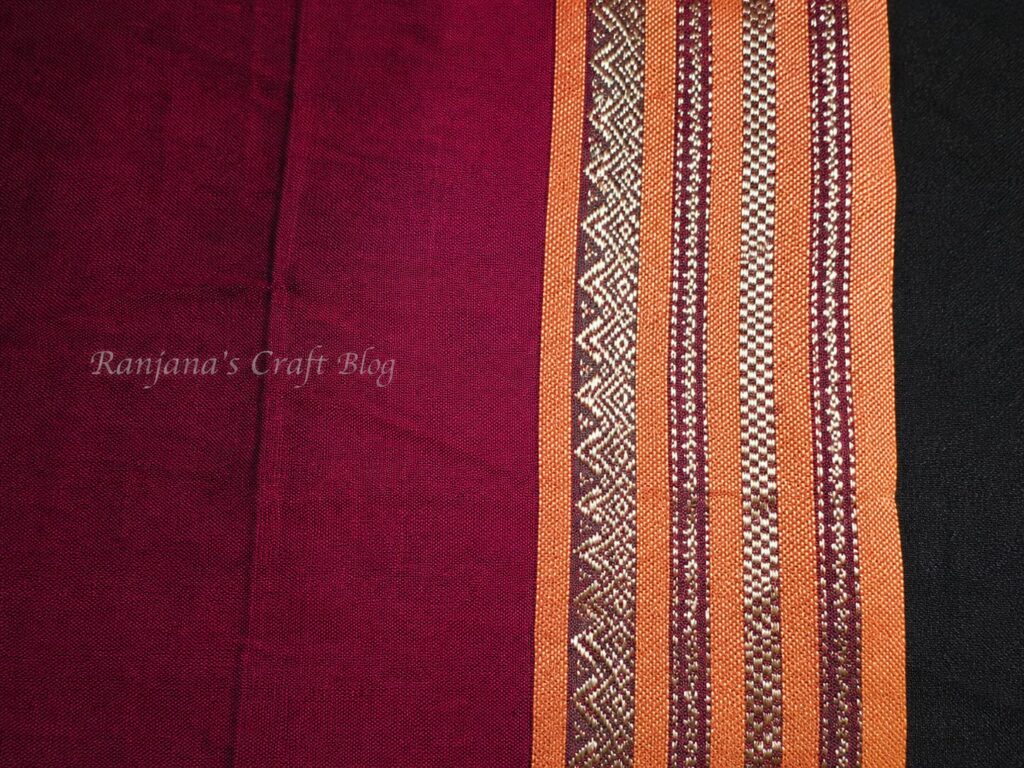
The second saree is also maroon, but the fabric is different as it contains a blend of silk threads, giving it a soft sheen and a richer appearance. This saree belongs to my attige (sister-in-law). It was an old favourite that had become a little plain over the years, so she wanted to give it a fresh new look without altering its traditional charm.
I felt that hand screen printing would be the quickest and most effective way to transform the saree. The deep maroon shade paired beautifully with the golden border, creating a classic and elegant combination that perfectly suited traditional Indian motifs.
 |
For this makeover, I chose peacock designs, as they instantly add richness and grace to any form of art. Large peacock motifs were printed along with smaller matching motifs on the border, and I embellished them with kundan stones to give a subtle sparkle. On the pallu, I kept the design simple by printing a delicate flowing vine pattern, allowing the border to remain the highlight. For the shoulder portion of the saree, I created a focal design using three peacock motifs arranged around a circular motif, giving the saree a balanced and elegant finish.
This simple makeover transformed an old saree into one that looks fresh, festive, and ready to be worn again, proving that a little creativity can breathe new life into treasured garments.
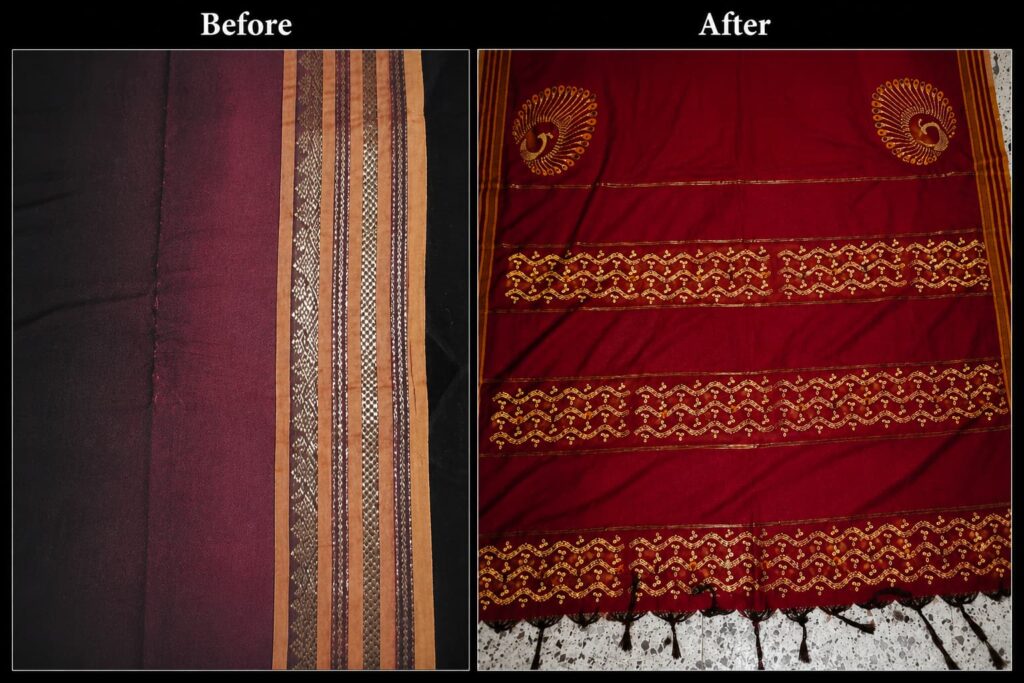
The overall look of the saree
Here is the closer view of the peacock motifs:
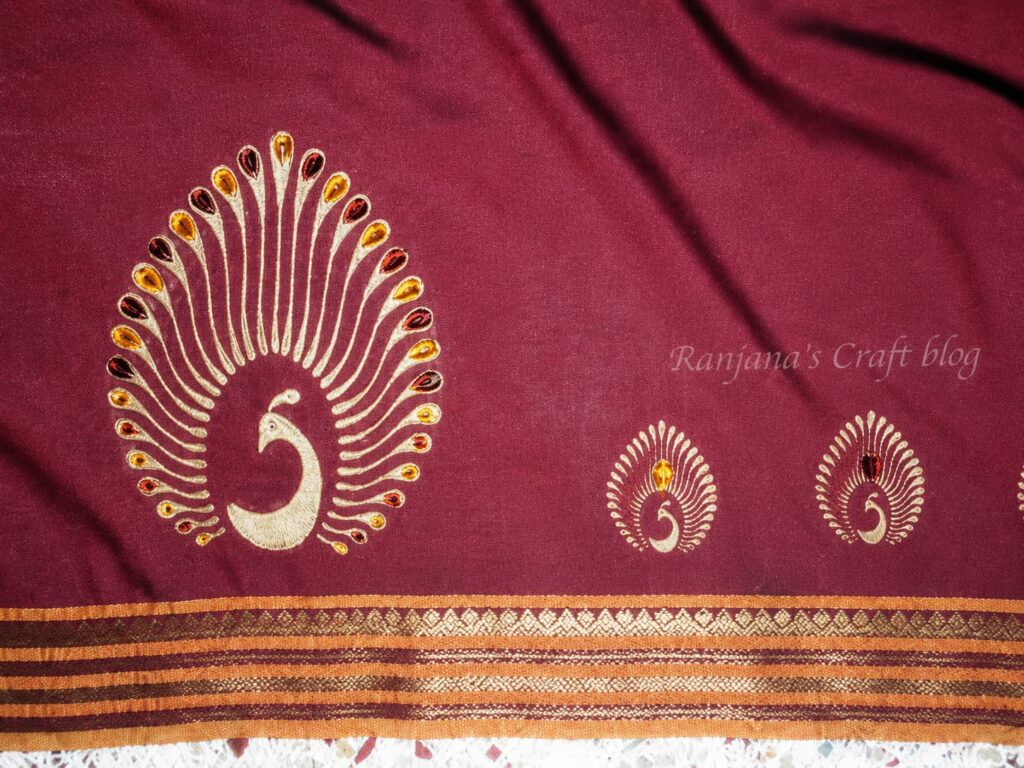
The peacock motif
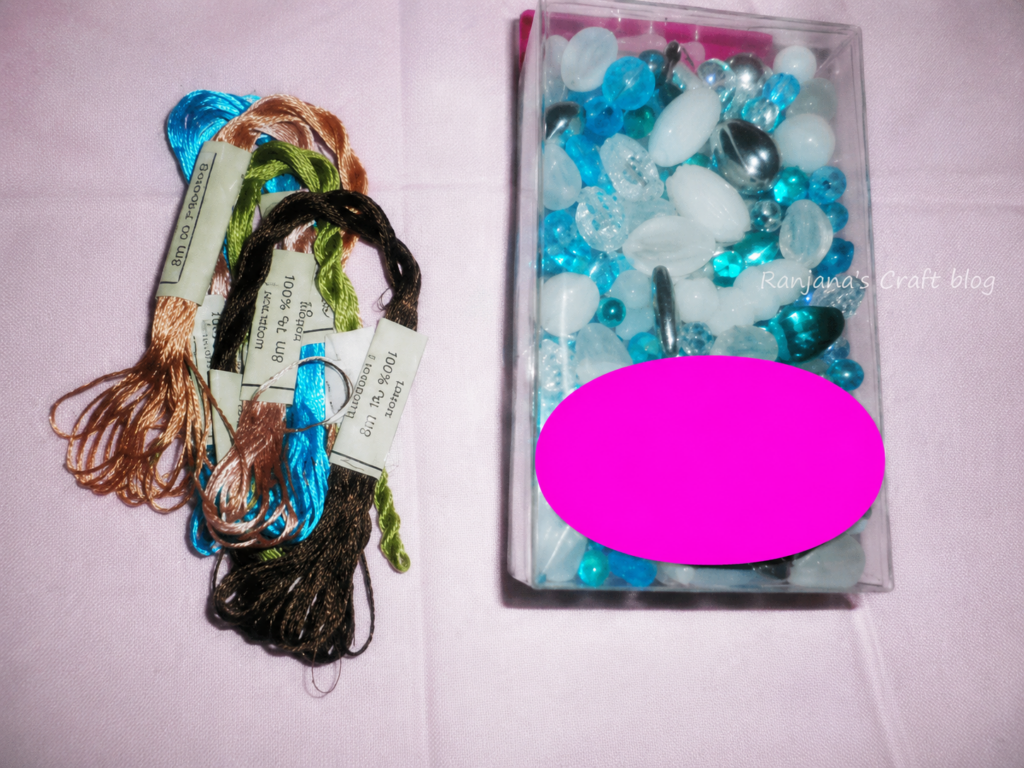
The beads and threads
You can do BE with cone threads.Art silk is not a great substitute for rayon.But something is better than nothing. You can use them in combo with cone threads which we get in abundance here in India
Deepa
Thanks Deepa, Even I thought the same. Do you know where can we get the threads in India?
Ranjana,the peacock design is simply superb.Do you make the screen printing yourself?Very nice.
Thanks Mahalakshmi.Yes I make the screen printing myself. I've some ready-made frames also.
Mahalakshmi, Even your works are wonderful.
beautiful screen printing and yes elephant design is very cute.. keep up your good work.. 🙂
Thanks you so much, Sarees
Superb threading work special peacock designs. Also matching stones gives amazing looks. Very nice..Keep it up..