Oh! I Got an Invitation for Gombe Habba – A Beautiful Journey into Karnataka’s Doll Festival
What is Gombe Habba?
Every year, Dasara brings with it colors, celebrations, and cherished traditions. One tradition that I eagerly look forward to is Gombe Habba, the beautiful festival of dolls celebrated in many homes across Karnataka. Gombe habba ( dolls arrangement ) is celebrated in Navaratri , in some parts of India, especially in Mysore,Bangalore , Andhra and Tamilnadu. We don’t have this tradition. I had seen this , in some Kannada Movies, and always liked this.When I received an invitation to visit a Gombe Habba display, I was thrilled.
As I entered the house, I felt as though I had stepped into a miniature world filled with stories, history, and devotion. From magnificent replicas of Mysore Palace to intricate dolls depicting scenes from Indian mythology, every display reflected remarkable craftsmanship and creativity.
In this post, I am sharing some of the unique dolls and miniature displays that caught my attention during my visi
Once Navaratri starts, in some of the shops the dolls are sold. As a preparation of the Dolls Arrangement, people buy the dolls from shops and add it to their existing collection of dolls. Every year, I visit these shops, just to have a look of dolls. Its really nice to see people, excitedly buying the dolls for the dolls arrangement.
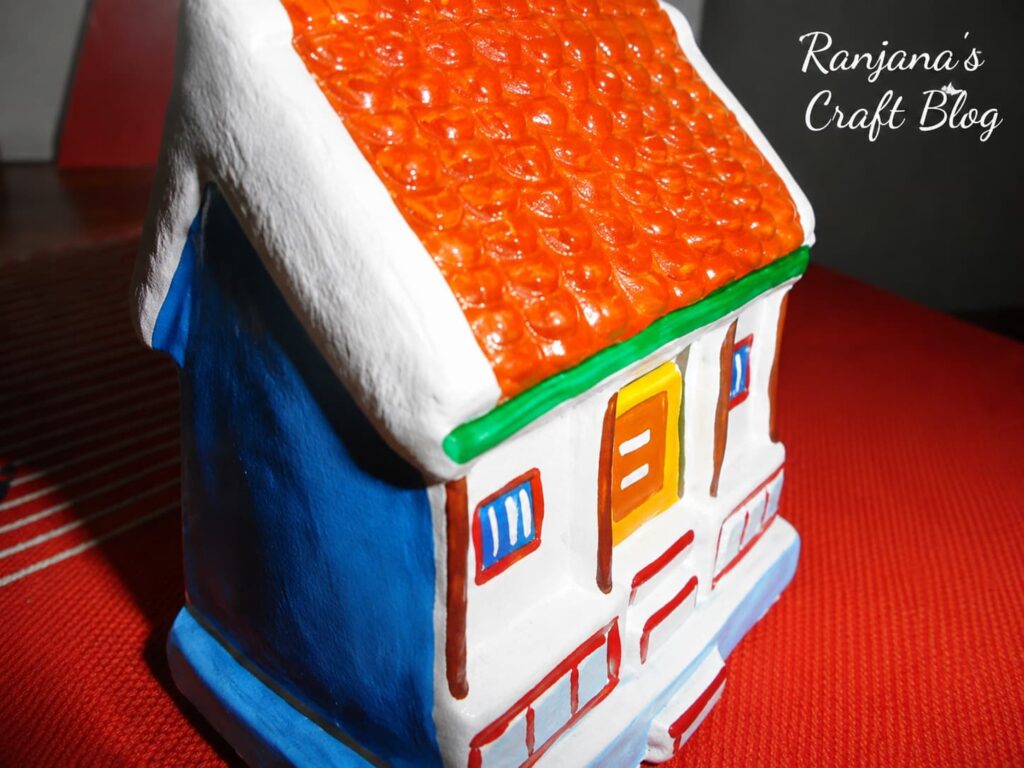
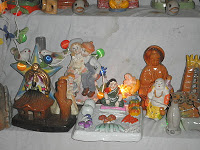
Dasara dolls- small house
My Visit to This Year’s Gombe Habba
Last year, one of my friends had invited me to visit a beautiful Gombe Habba display. Ever since then, I had been eagerly hoping for another invitation this year. As the Navaratri season progressed and no invitation arrived, I started feeling a little disappointed.
Then, yesterday morning, one of my friends called and invited me to visit her Gombe Habba arrangement. “Oh! Finally, I got an invitation!” I was thrilled. Even though I reached home late from work because of the heavy traffic, I didn’t want to miss the opportunity. So, accompanied by my son, I visited her house that evening.
It was a delight to see the wonderful collection of dolls arranged so beautifully. Traditionally, the dolls are displayed on stepped platforms known as “Gombe Mane” or “Kolu.” The number of steps usually varies from 3, 5, 7, or 9, depending on the family’s collection of dolls and the available space. Each step was filled with colorful dolls depicting mythological stories, cultural traditions, and everyday life, making the display truly fascinating.
My expirienece in this Gombe Habba:
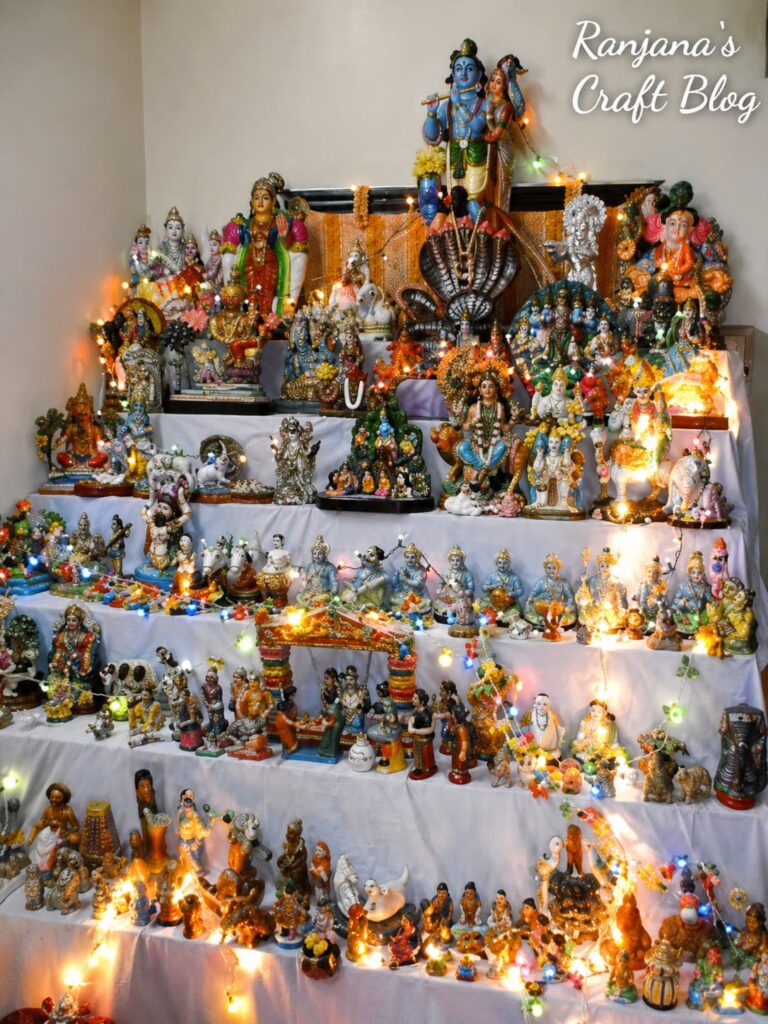
What a colorful and delightful sight it was! Everywhere I looked, there were dolls of different sizes, shapes, and vibrant colors. The display included dolls of Gods and Goddesses, as well as beautifully arranged sets depicting various cultures, traditions, occupations, and scenes from everyday life.
I must admit that I do not know much about the origins of this wonderful tradition. However, I learned that these doll collections are built over many years, with a few new dolls being added each Navaratri season. As a result, every collection becomes a treasured family heirloom filled with memories.
My friend also shared an interesting custom with me. When a girl gets married, she receives a pair of Pattada Gombe (the traditional King and Queen dolls) from her mother. She then carries this tradition forward in her own home, adding to the collection year after year and passing it on to the next generation. I found it heartwarming to see how Gombe Habba helps preserve not only culture and traditions but also precious family memories.
Here is the decorated Pattada Gombe
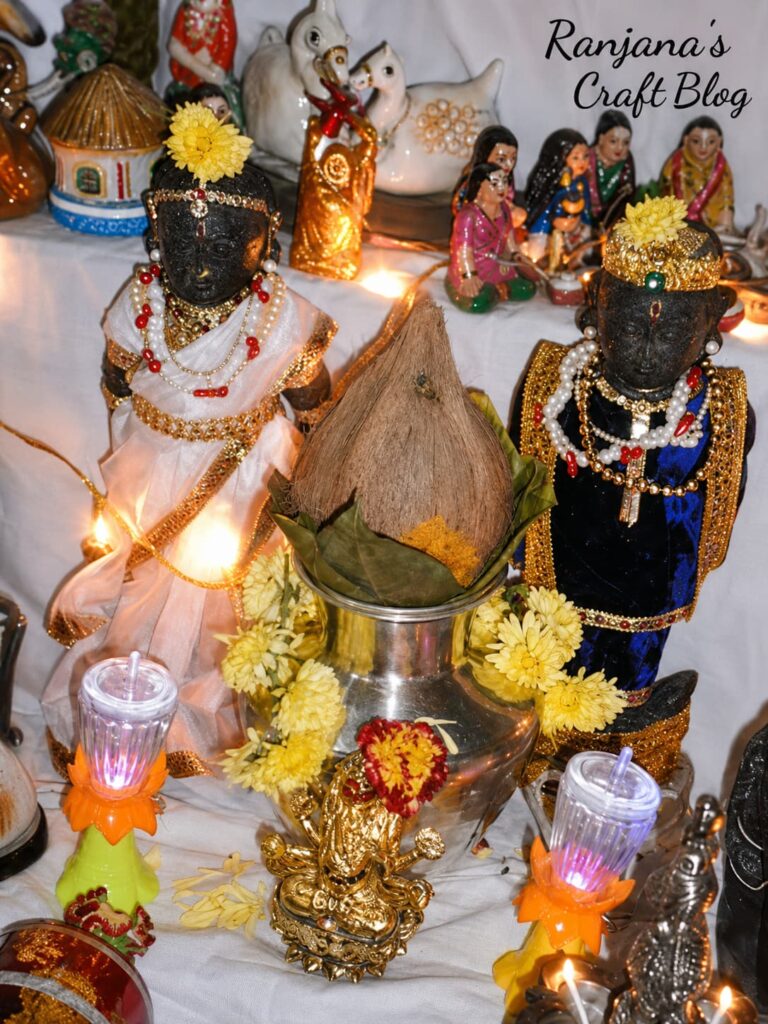
Dasara dolls- Pattada gombe
There were many beautiful dolls depicting the different forms and stories of Lord Krishna. Among them, the Kalinga Mardana doll particularly caught my attention. The doll portrayed Krishna gracefully dancing on the serpent Kalinga, capturing a famous episode from Hindu mythology. Its intricate details and vibrant colors added a special charm to the entire display and brought a sense of liveliness and beauty to the arrangement.
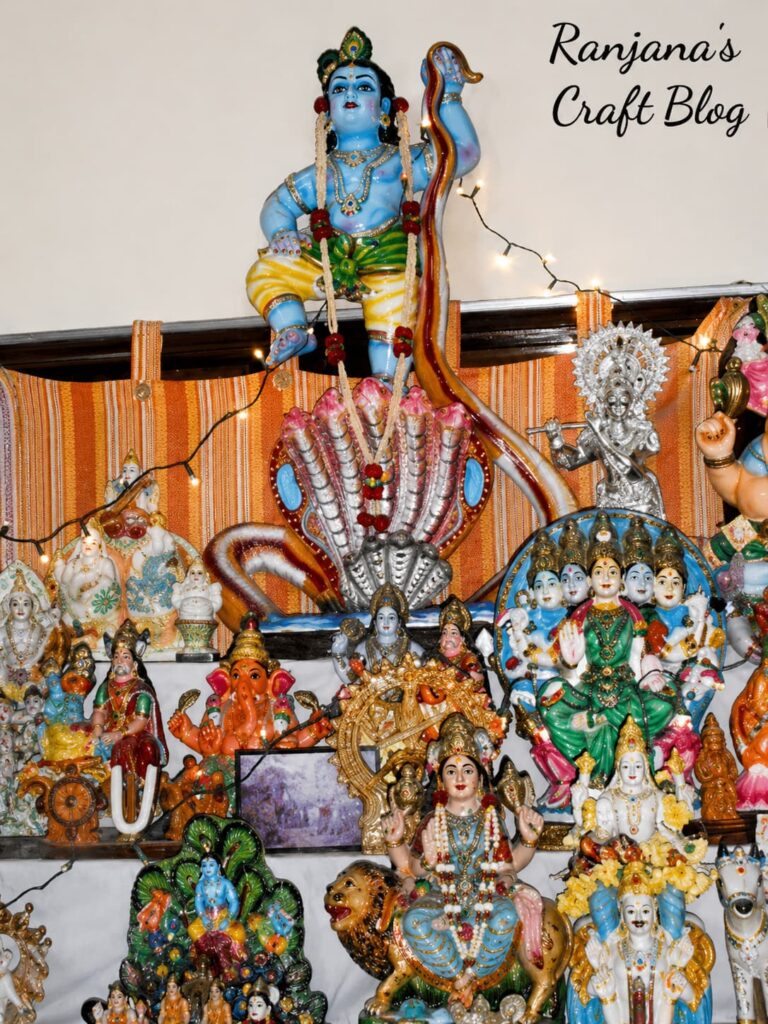
Dasara dolls- Krishna Kalinga Mardana
The row below featured beautifully crafted idols of Lord Vishnu with Goddess Lakshmi, Lord Nataraja, Goddess Gayathri, and Lord Varaha with Bhoodevi.
As I admired the display, it felt as though the heavens had descended to earth. Lord Shiva and Goddess Parvati were majestically seated on their vahana, Nandi (Basava), blessing the devotees. Nearby stood Maa Durga, radiating strength and compassion, reassuring us with her divine protection. Lord Vishnu, seated on his mighty vehicle Garuda, completed this celestial gathering.
Looking at all these divine forms together, I couldn’t help but feel that a small piece of heaven had indeed found its way into this beautiful Gombe Habba display.
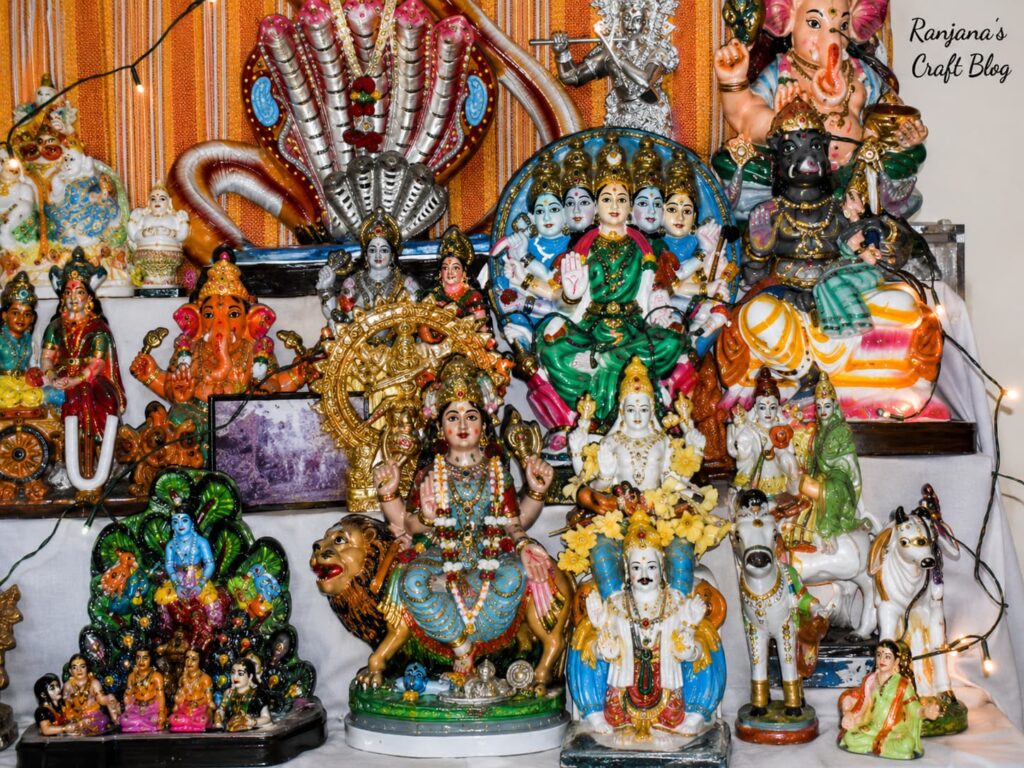
The dolls arrangement
One of the most fascinating displays was a series of dolls depicting Lord Krishna playing different musical instruments. Each doll was beautifully crafted and showcased Krishna in a unique pose, creating a charming and lively scene. The attention to detail in the costumes, expressions, and instruments made this collection especially captivating.
Below, you can see a lovely set of dolls portraying a Shashtipoorthi celebration, the traditional ceremony marking a person’s 60th birthday. The miniature figures beautifully capture the rituals and festive atmosphere associated with this important milestone, making the display both meaningful and delightful to observe.
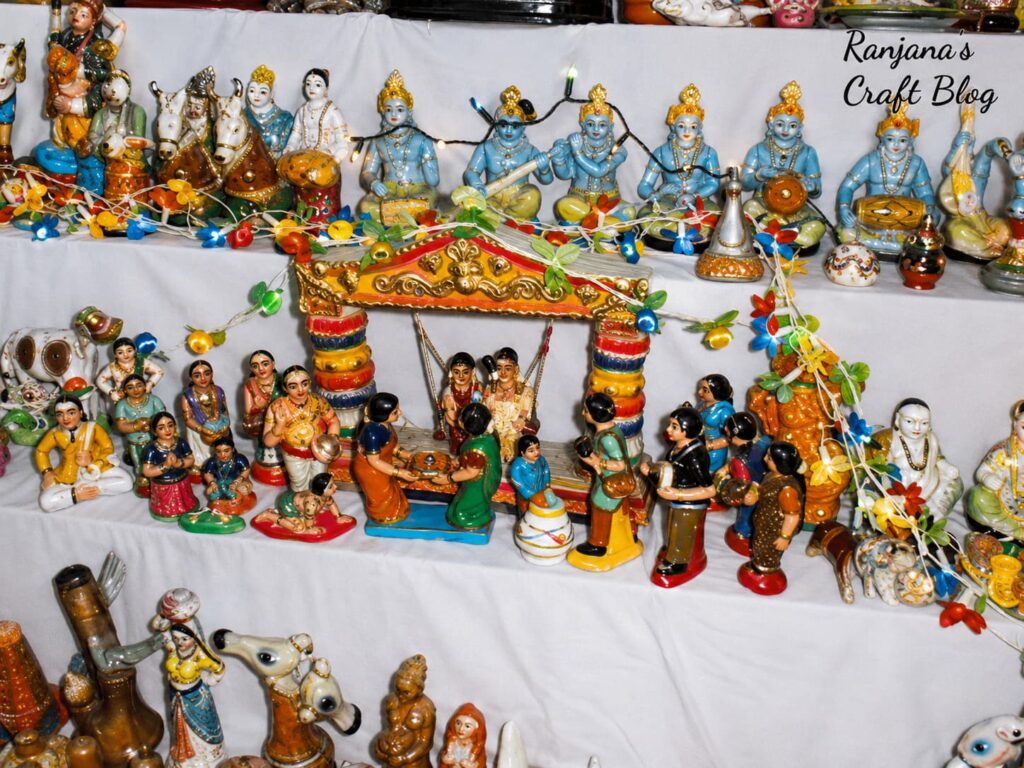
Dasara dolls arrangements
Beside Lord Krishna stood Meerabai, completely immersed in devotion, singing a bhajan in praise of her beloved Krishna. The scene was beautifully crafted and instantly brought to mind the deep bond between the saint-poet and the Lord.
However, I must confess that I was a little puzzled by the teddy bear sitting nearby! Perhaps it had found its own place in this divine gathering, adding a touch of modern-day charm to the traditional display. 🙂
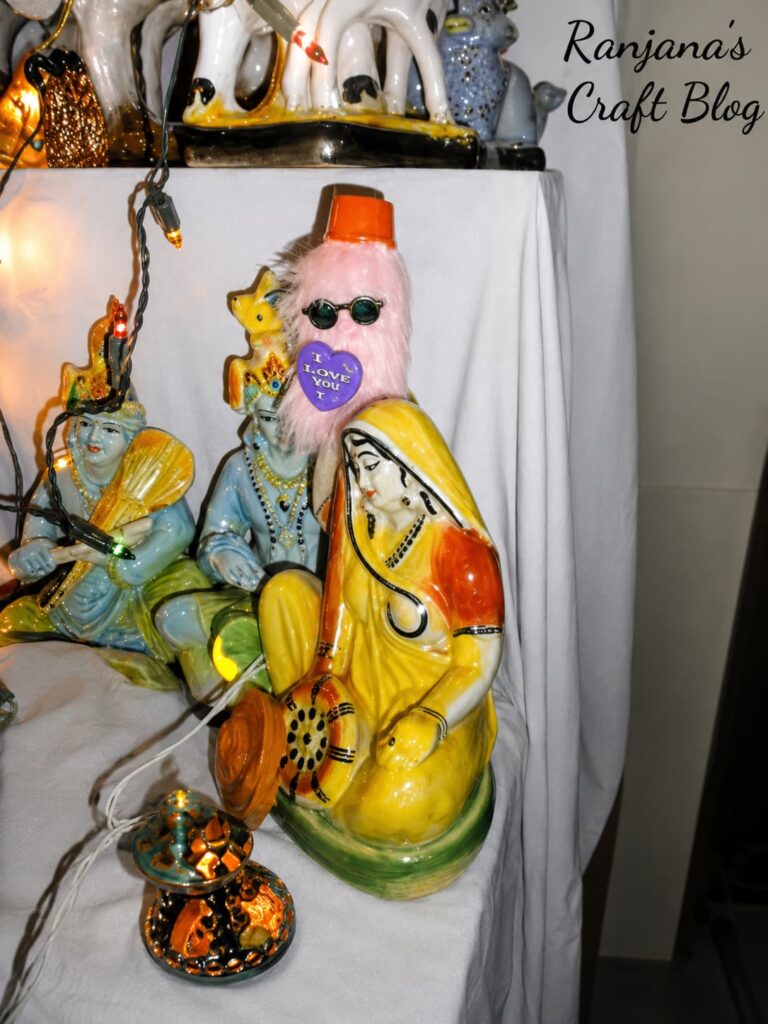
The teddy
Another delightful set depicted Krishna’s Bala Leelas (childhood adventures). From his playful antics to his innocent smile, the dolls beautifully captured the joy and magic of young Krishna. Looking at these scenes, one could almost imagine being transported to Gokula, witnessing the enchanting childhood of Lord Krishna firsthand.
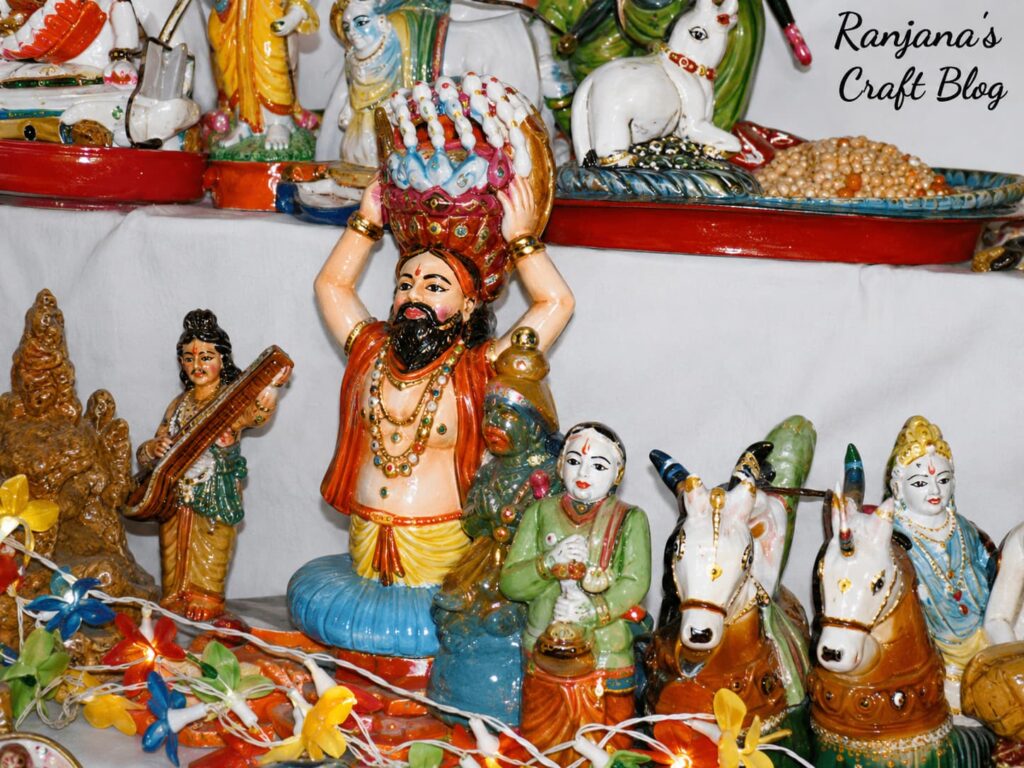
Krishna’s Bala Leela
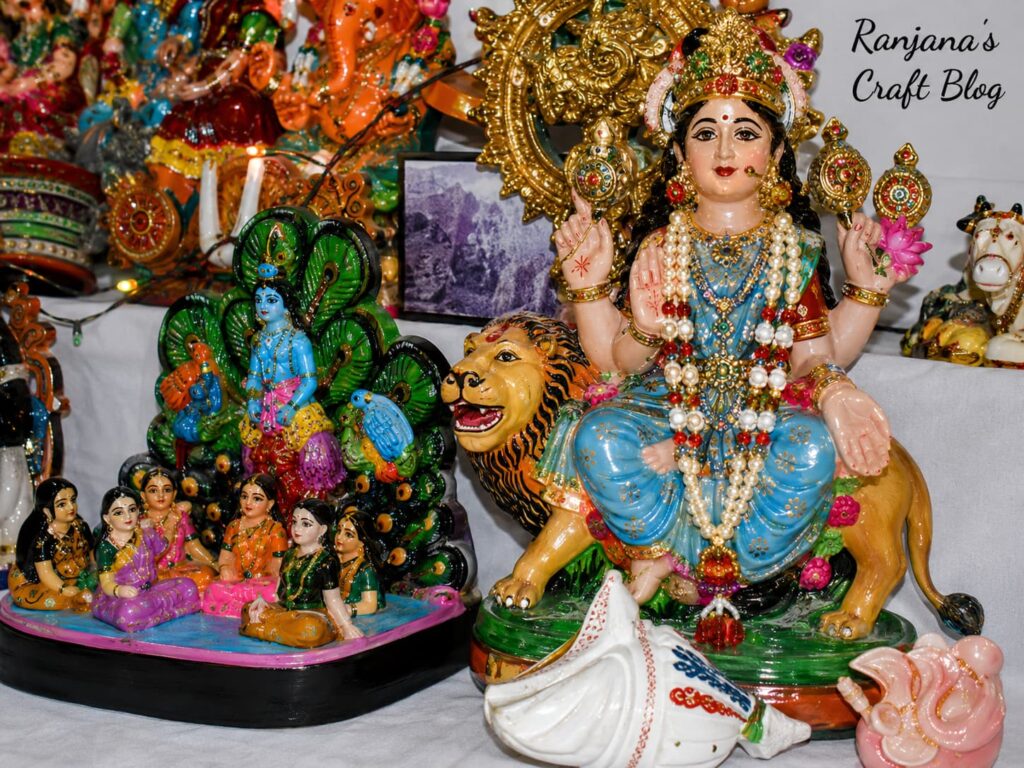
Dolls depicting Krishna Leela
The vegetable vendor doll- Gombehabba
Need vegetables and groceries for the festival preparations? The miniature market scene below has everything you could possibly need! The vendors are busy selling fresh vegetables, fruits, and other essential items, creating a lively village marketplace atmosphere.
The attention to detail in these dolls is remarkable. From the neatly arranged baskets of produce to the expressions on the vendors’ faces, every element brings the scene to life. It feels as though the market is bustling with activity, ready to welcome customers preparing for the festive celebrations.
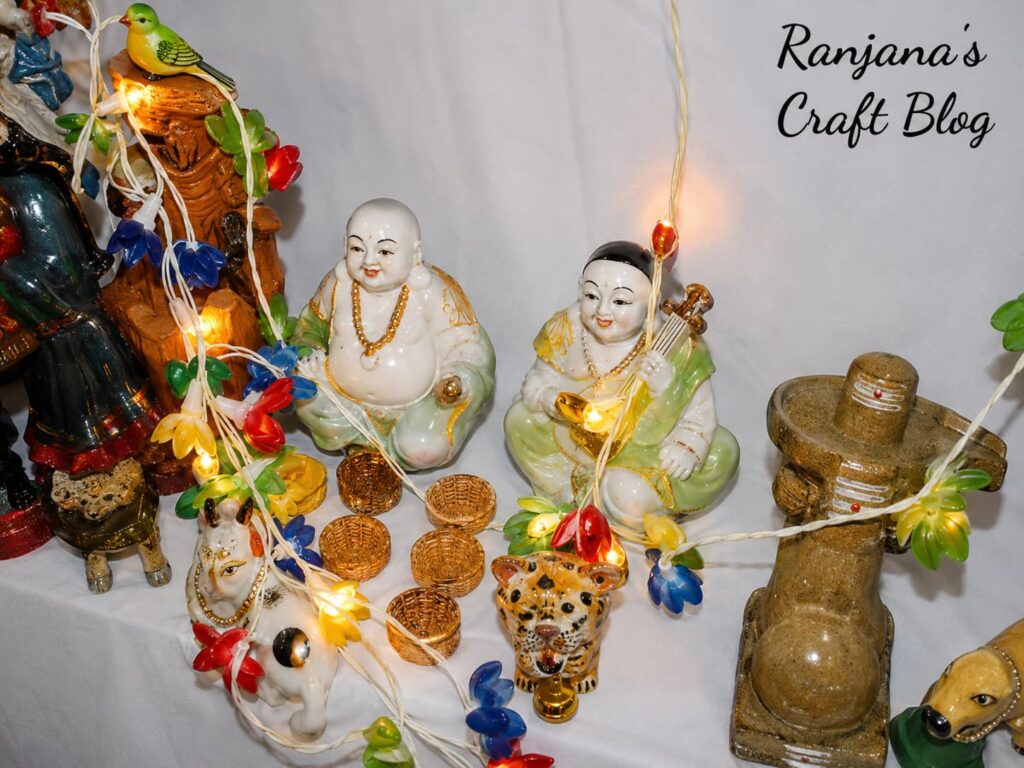
Dasara dolls- Vegetable vendors
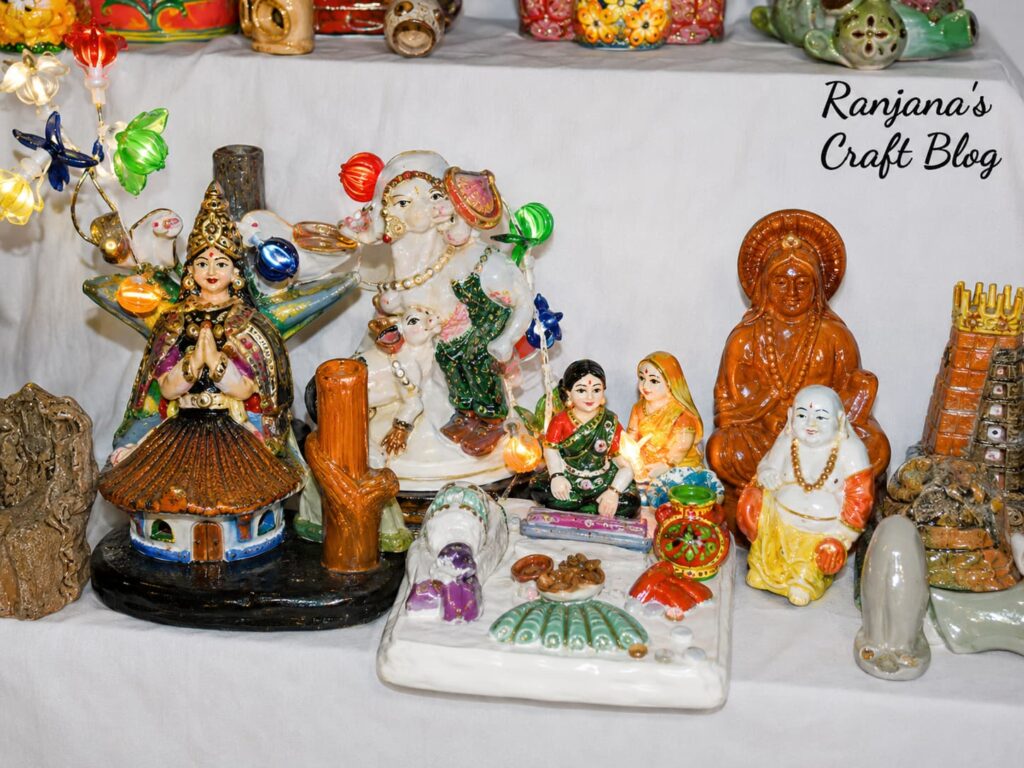
Dolls marriage
Dasara Gombehabba- Dolls marriage
Most of us have fond childhood memories of playing with dolls. Do you remember one of our favorite games—dolls’ marriage? We would carefully dress one doll as the bride and another as the bridegroom, and then happily conduct an elaborate wedding ceremony with our friends.
This delightful set of dolls instantly brought back those cherished memories. Looking at them reminded me of the hours we spent arranging miniature weddings, preparing tiny feasts, and celebrating the occasion with great enthusiasm. These dolls are not just decorative pieces; they are a beautiful reminder of the innocence and joy of childhood.
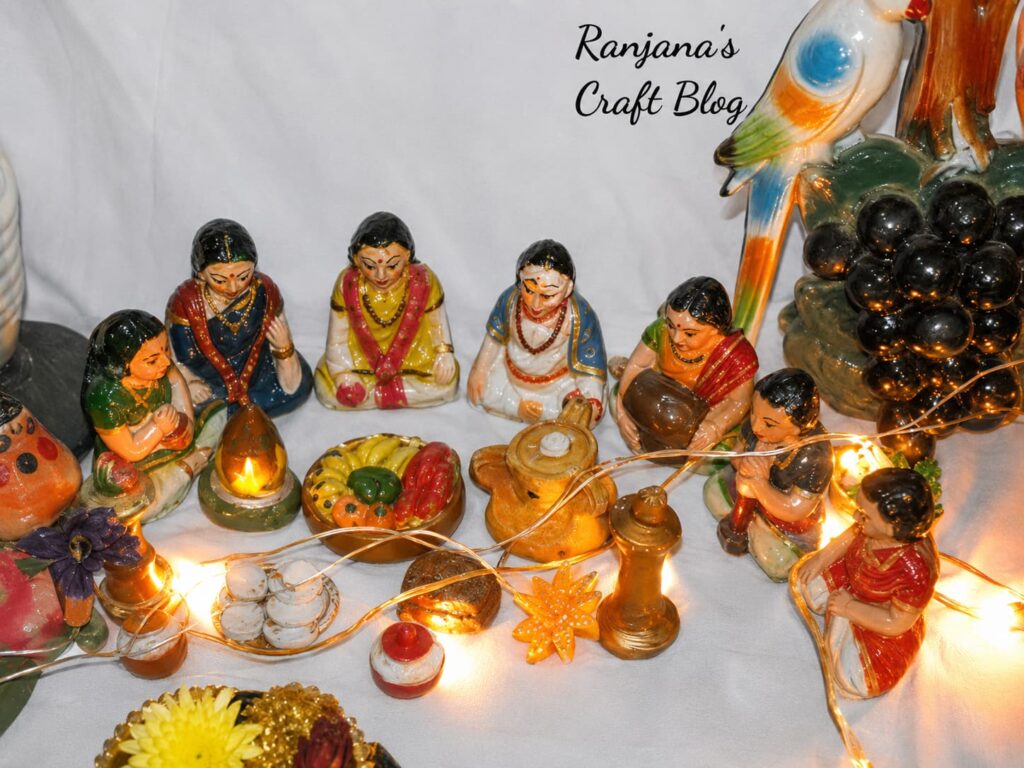
Doll marriage
Curious about what happens after the festival, I asked my friend how they store such a large collection of dolls. She explained that each doll is carefully wrapped in cloth or paper and packed away in boxes until the next Navaratri.
As I listened, my imagination began to wander. I pictured the dolls quietly waiting inside their boxes, eager for the arrival of the next Navaratri when they could once again display their beauty and charm. Do they talk to one another while they wait? Do they share stories from previous festivals? Well, that’s just my imagination running wild! It reminded me of the movie Toy Story, where toys come alive when no one is watching. 🙂
Were you too lost in this enchanting world of dolls while reading this post? I thought so!
Wishing all my readers a very Happy Dasara filled with joy, prosperity, and beautiful memories.
While reading more about this tradition, I discovered something interesting. Japan has a somewhat similar festival called Hinamatsuri, also known as the Doll Festival. During this celebration, families display ornamental dolls representing the Emperor, Empress, and members of the imperial court. It is fascinating to see how different cultures around the world cherish and celebrate dolls as part of their traditions. Hinamatsuri- Ref : http://en.wikipedia.org/wiki/Hinamatsuri