Elegant Duppata Design with Tatting Motif and fabric painting
Handcrafted textiles always carry a unique charm, and this duppata design with tatting motif is a wonderful example of how traditional lace-making techniques can be beautifully adapted into everyday fashion. This piece combines the elegance of black fabric with the delicate artistry of tatting-inspired embroidery, making it a versatile addition to any wardrobe. I have designed sarees, dresses with tatting motifs and embroidery. Also used tatting to make Saree kucchu. This time using tatting and fabric painting combination to design a duppata.
Here is the duppata I designed:
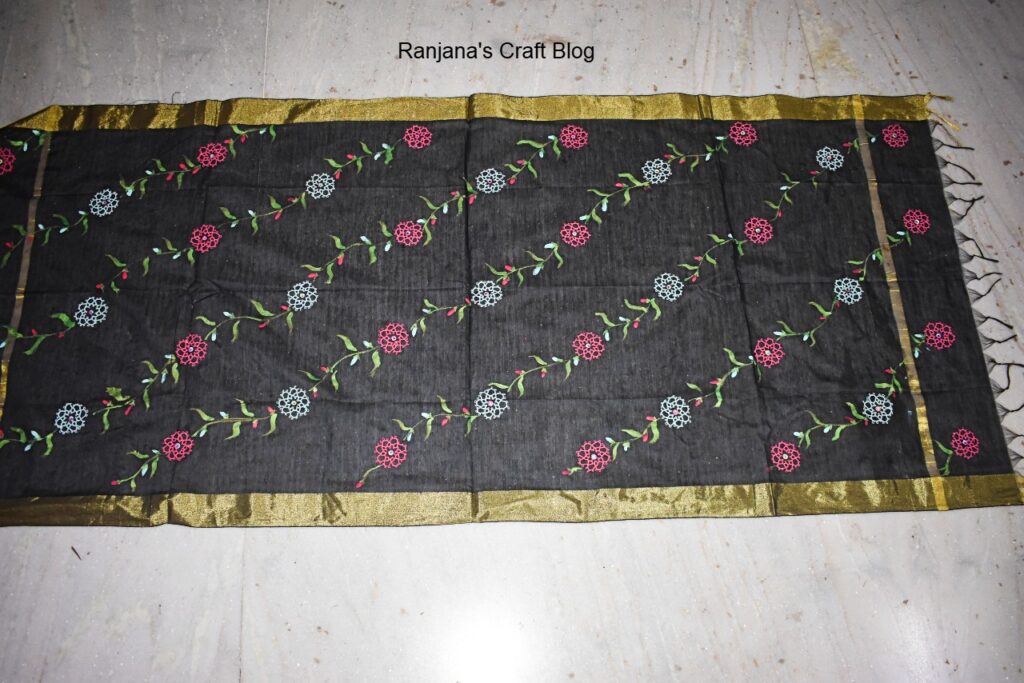
The duppata design
Inspiration Behind the Design
Tatting is a centuries-old lace-making craft, known for its intricate knots and loops that form floral and geometric patterns. In this dupatta, instead of creating full lace separately, motifs inspired by tatting have been embroidered directly onto the fabric. I had made some motifs to design saree. But I was immature in tatting during that time, and now I didn’t like the motifs I made.The stitches were quite loose. So instead of wasting those, I thought of using on Duppata.With this I combined fabrci painting.
Fabric and Base
The base of this dupatta is a fine black fabric, Chanderi silk cotton. This is chosen specifically to highlight the colored floral motifs. Black provides a dramatic backdrop, allowing the bright pink and sky-blue flowers to stand out vividly. The golden zari border adds a touch of richness, making it suitable for festive as well as semi-formal wear.
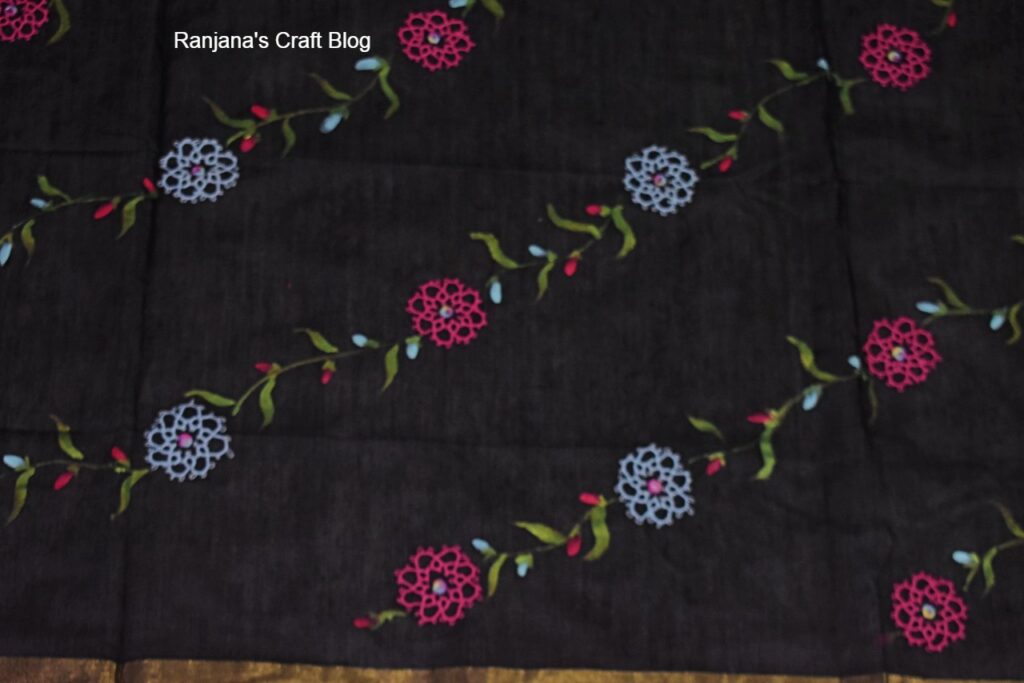
The motifs and fabric painting combination
Painting Details
The floral motifs are painted diagonally across the dupatta. Each flower is tatting motif.
-
Colors Used: The green paint is fevicryl metallic color is used for the stems and leaves, and a touch of pink and light blue for buds.
-
Layout: The motifs are connected by flowing green vines, creating a rhythmic, diagonal arrangement that enhances the drape of the dupatta.
The free-flowing design ensures that when draped, the motifs align beautifully, making the dupatta visually appealing from every angle.
This is how it looks when worn:
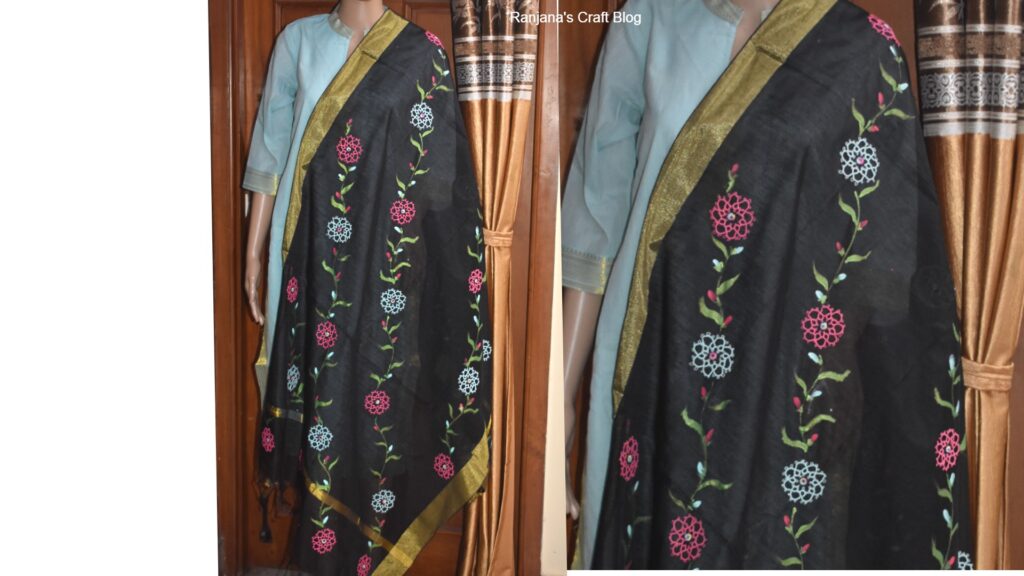
When worn
Styling the Dupatta
-
Pair it with a plain kurta in soft pastels (like mint, beige, or peach) to make the motifs pop.
-
For a richer look, wear it with black or golden outfits to match the zari border.
-
The painted motifs make the dupatta lightweight and easy to carry, unlike heavily embroidered ones, giving comfort with style.
This dupatta is a creative experiment where tatting motifs meet fabric painting—proving that traditional inspiration can be reimagined in modern, wearable art. I have designed one more saree with fabric painting. I will share about that in coming post.
Love, Laugh and Live the life to the fullest,
-Ranjana