
Deepotsava- Exhibition of lamps
It is the auspicious month of Kartika, a time when temples across India glow with the light of Deepotsava. Thousands of oil lamps are lit as devotees offer prayers, creating a breathtaking spiritual atmosphere. During this sacred month, many families also light traditional lamps in their homes every evening, symbolizing prosperity, positivity, and the victory of light over darkness.
A few days ago, while returning from work, I noticed a board outside a shop that read “Deepotsava.” Curious to see what it offered, I stepped inside. It was a delightful surprise! The shop was filled with an incredible collection of lamps—beautiful terracotta diyas, elegant brass lamps, and even silver lamps. Many of the terracotta lamps were hand-painted with vibrant colors and intricate designs, while the brass lamps showcased timeless traditional craftsmanship. It truly felt like stepping into a world illuminated by art, culture, and devotion
Types of Decorative Diyas in This Collection
The shop had an impressive collection of lamps made from a variety of materials, including brass, terracotta, steel, and other metals. There was something to suit every taste and purpose. The collection featured lamps in numerous shapes and sizes—some reflected timeless traditional craftsmanship, while others showcased contemporary designs with a modern touch. There were elegant single-wick diyas for everyday prayers as well as beautifully crafted multi-wick lamps that are perfect for festivals, temple rituals, and special occasions. Every lamp had its own unique charm, making the collection a visual delight for anyone who appreciates traditional Indian art and craftsmanship.
This collection features beautifully crafted decorative brass lamps in a variety of traditional and artistic designs. Many of them are embellished with colorful enamel work in vibrant shades of blue, green, and red, giving them a festive and elegant appearance. The collection includes single-wick diyas, multi-wick lamps, lotus-shaped lamps, and decorative deepams suitable for pooja rooms and temples. These lamps are perfect for Deepavali, Kartika Deepotsava, Lakshmi Pooja, Navaratri, and other religious celebrations. Besides lighting during worship, they also make attractive gifts and timeless home décor pieces that reflect India’s rich artistic heritage.
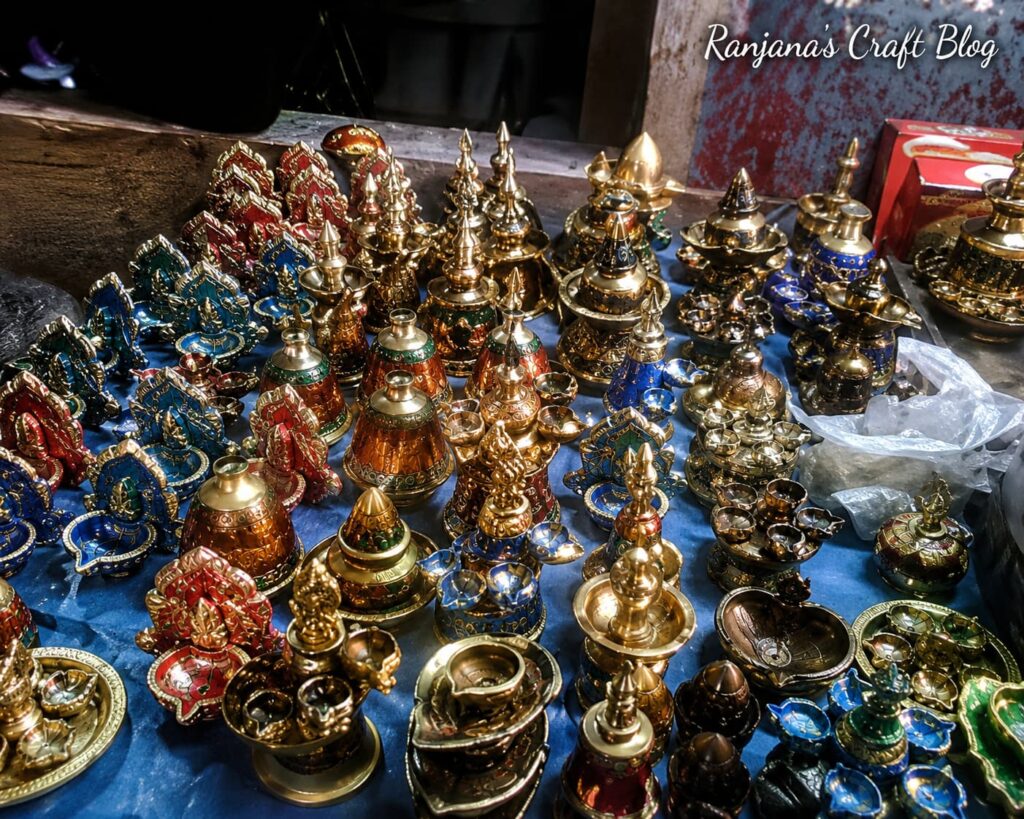
The collection of lamps
Hand painted terracotta lamps:
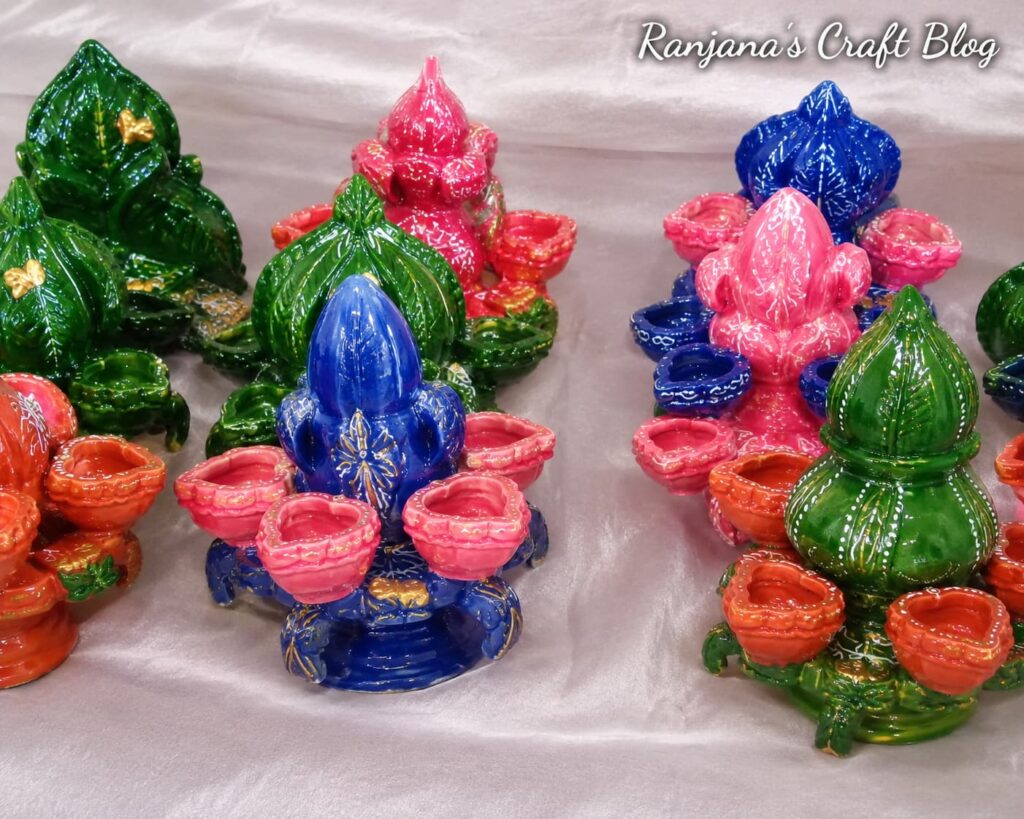
Terracotta lamps
These decorative diya sets are beautifully arranged on a thali (plate), making them perfect for festive decorations and pooja ceremonies. Traditional colors such as red, yellow, green, and gold have been used to give the lamps a vibrant and auspicious appearance. The combination of bright colors, intricate embellishments, and golden accents reflects the rich heritage of Indian craftsmanship.
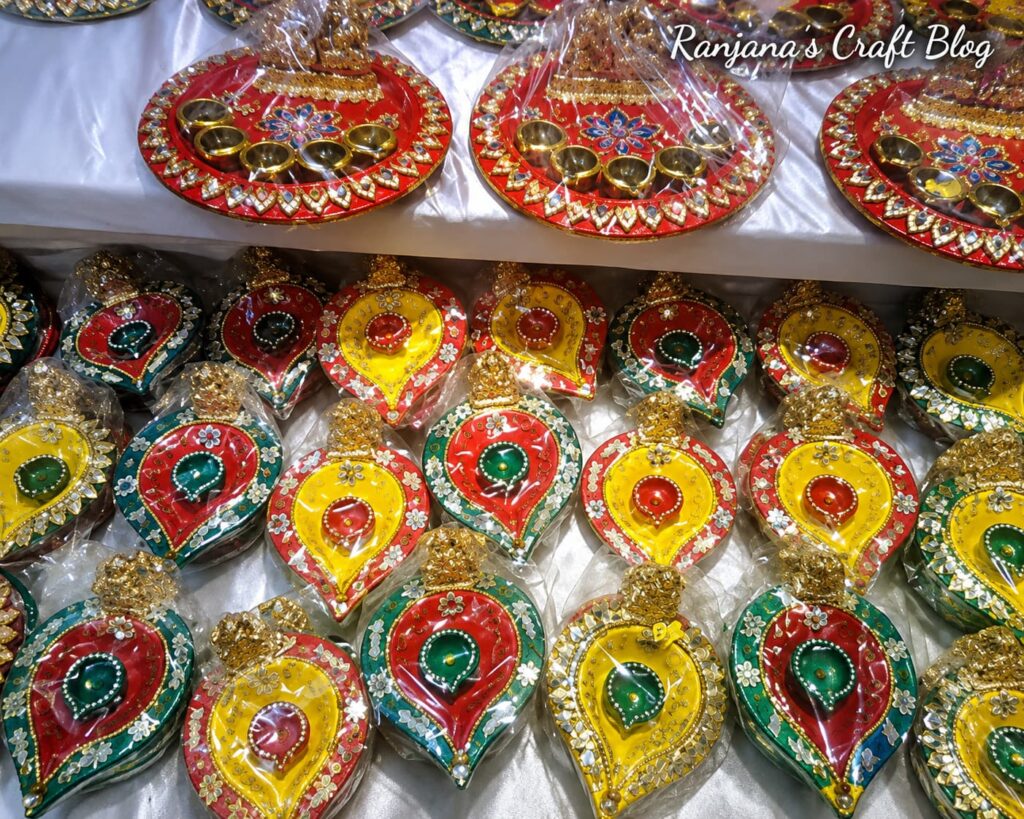
Terracotta lamps
Terracotta multilayered lamps:
These are multi-tiered terracotta lamps, traditionally used in temples during festivals and special religious ceremonies. Unlike brightly painted decorative diyas, these lamps retain their natural earthy terracotta color, which adds to their rustic beauty and traditional appeal. The delicate white dot and line artwork creates a striking contrast against the clay surface, enhancing their elegance without overpowering their simplicity. At the bottom of the display are small porcelain lamps in various colors. Though compact in size, each porcelain lamp is designed to hold five wicks, making them ideal for creating a bright and beautiful festive glow during Deepavali, Kartika Deepotsava, and other auspicious occasions.
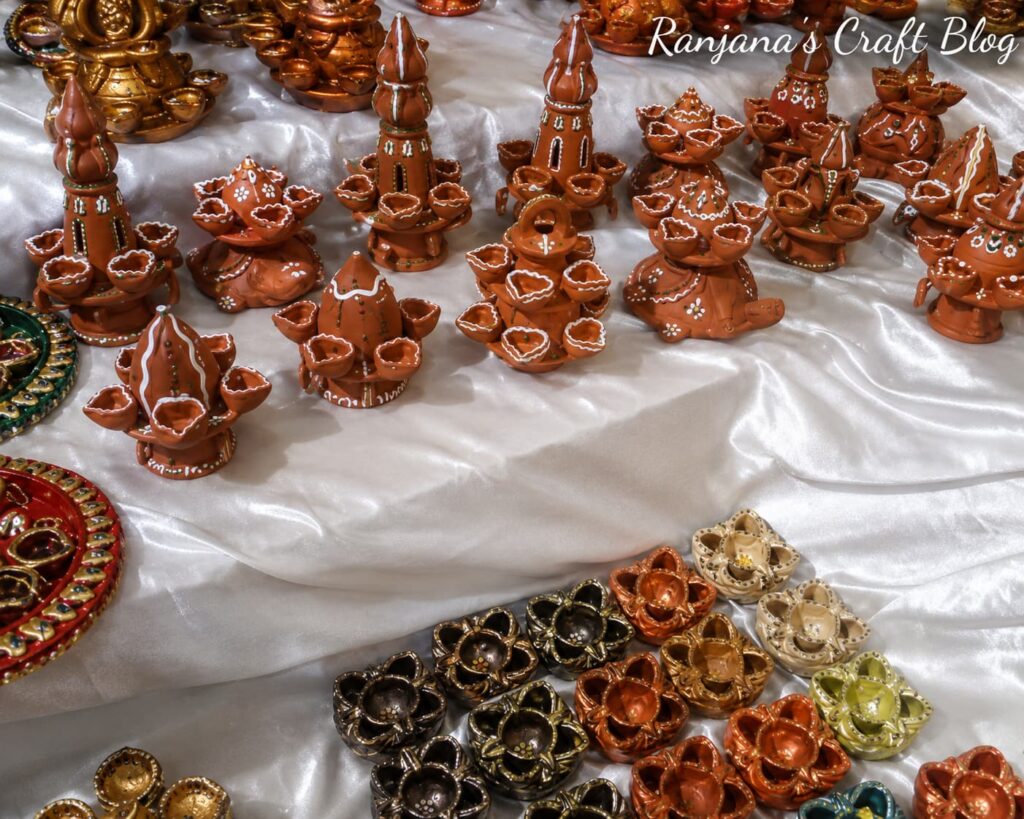
Terracotta multilayered lamps
Deepas in the shape of Gods and Godesses:
There were many Diys in the shape of Gods and Goddesses. The below one very attractive. It has a counch shape created and in front of that small idols can be seen.
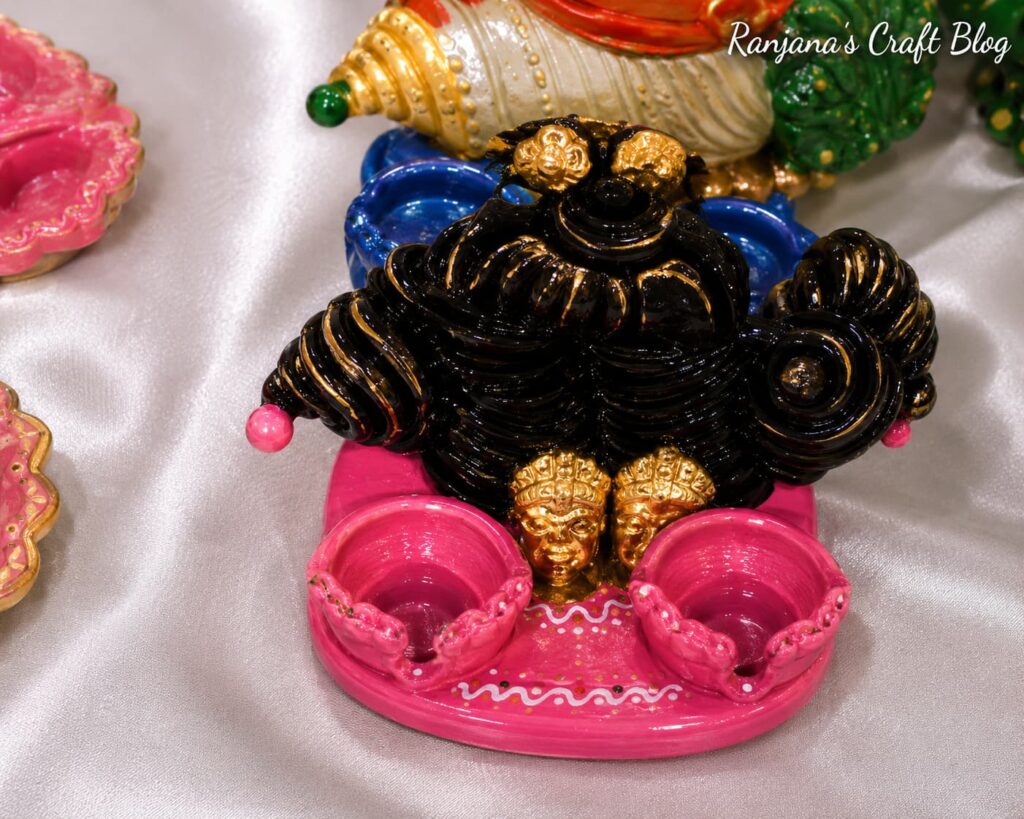
The lamps with idols
Brass lamps:
There were brass lamps too. Some were simple, others in some shapes.
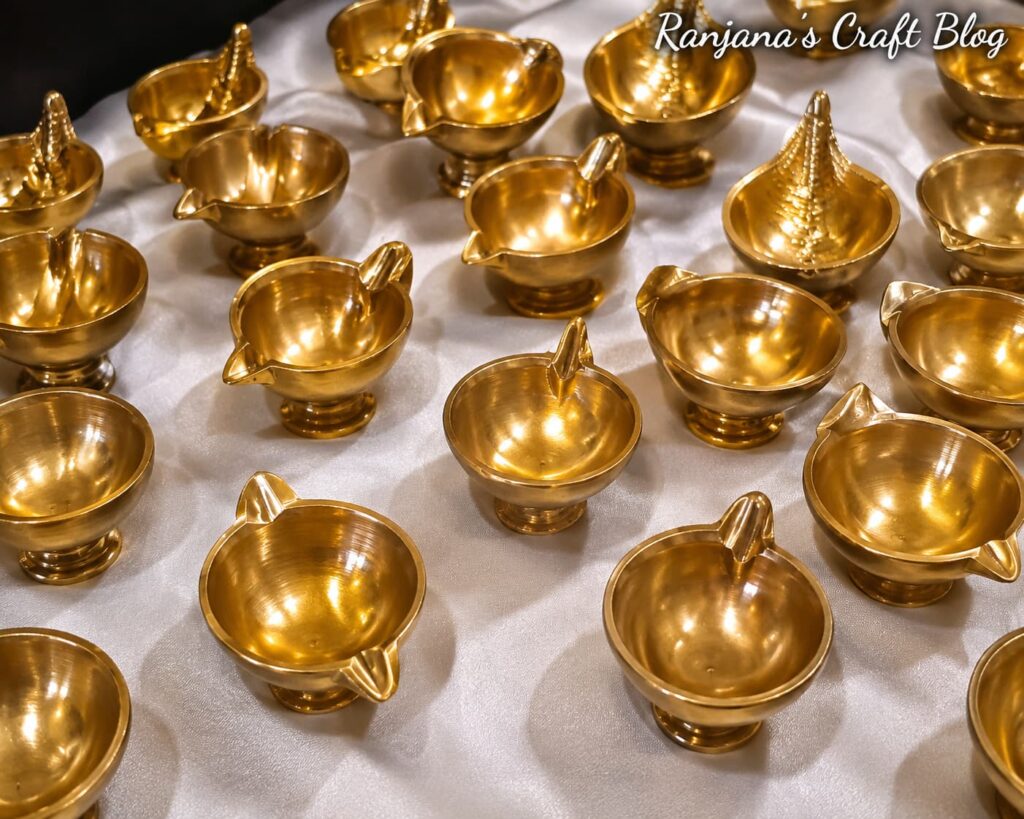
Simple brass lamps
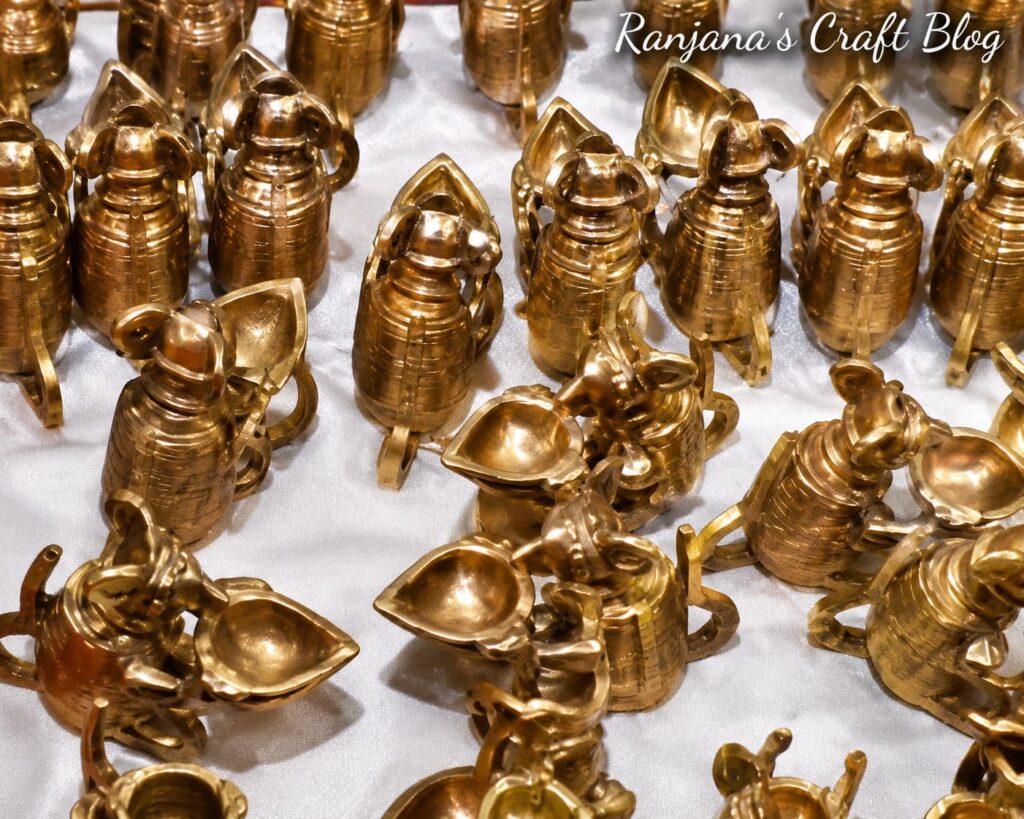
Mouse shaped lamps
Very nice collections of lamps. Looks so pretty and traditional. Thanks Ranju for sharing such a beautiful collection.
Thanks , Priya.
Ranjana,
BE threads are not available in India.You have to get it from U.S. Cone threads & silk threads are a poor Indian substitute for BE rayon. You can get those in embroidery material shops.
Thanks for visiting and the good wishes,
Deepa
Such a lovely collection!!
Cheers
Sonia
cardsandschoolprojects.blogspot.com
Ranjana madam
Thanks for sharing beautiful collection of Lamps. They are amazing.
Ranjana madam this is my article on Lamps of India which i shared in my Heritage of India blog. In this message i am sharing several Lamps of India and using the images of several vintage postcards.
http://indian-heritage-and-culture.blogspot.in/2013/09/lamps-of-india.html
Ranjana madam apart from sharing my collections relating to Indian Heritage and Culture in my blog i am also sharing my knowledge on Indian Heritage and Culture with school and college students by giving seminars to them. Ranjana madam so far i gave 2 seminars to students. Madam please look into my Seminars messages and give your valuable comments for my 2 seminars.
http://indian-heritage-and-culture.blogspot.in/2013/02/my-first-seminar-on-indian-heritage-and.html
http://indian-heritage-and-culture.blogspot.in/2013/07/my-second-seminar-on-indian-heritage.html
Ranjana madam
Thanks for sharing beautiful collection of Lamps. They are amazing.
Ranjana madam this is my article on Lamps of India which i shared in my Heritage of India blog. In this message i am sharing several Lamps of India and using the images of several vintage postcards.
http://indian-heritage-and-culture.blogspot.in/2013/09/lamps-of-india.html
Ranjana madam apart from sharing my collections relating to Indian Heritage and Culture in my blog i am also sharing my knowledge on Indian Heritage and Culture with school and college students by giving seminars to them. Ranjana madam so far i gave 2 seminars to students. Madam please look into my Seminars messages and give your valuable comments for my 2 seminars.
http://indian-heritage-and-culture.blogspot.in/2013/02/my-first-seminar-on-indian-heritage-and.html
http://indian-heritage-and-culture.blogspot.in/2013/07/my-second-seminar-on-indian-heritage.html