
Lakshmi Sculpture at Somanathapura Temple – Exquisite Hoysala Stone Carving and Architectural Masterpiece
I had planned to publish this post on the auspicious occasion of Lakshmi Puja during Deepavali, but for several reasons, it had to be postponed. Life always gives us plenty of reasons not to complete a task, but rarely a reason to actually finish it. Still, it is never too late to share something beautiful and meaningful.
Goddess Lakshmi, the Hindu Goddess of wealth, prosperity, and abundance, is worshipped on the main day of Lakshmi Puja during Deepavali. In Hindu homes, however, she is revered not just during the festival but throughout the year, as she is believed to bless devotees with prosperity, success, and well-being. This magnificent Lakshmi sculpture at the Somanathapura Temple beautifully reflects the devotion, artistic excellence, and spiritual heritage of the Hoysala period.
Jokes apart! A few months ago, we visited Talakadu and Somanathapura on a short trip. It turned out to be a memorable experience, especially because of the magnificent Somanathapura Temple, one of the finest examples of Hoysala architecture.
Although the main deities inside the temple are no longer worshipped because the original idols were damaged centuries ago, the temple continues to captivate visitors with its extraordinary stone carvings and intricate sculptures. Every sculpture here is a masterpiece, depicting stories from Hindu mythology and showcasing the incredible craftsmanship of the Hoysala sculptors.
I captured numerous photographs of the temple and its beautiful sculptures, and I’ll be sharing them in a series of upcoming posts. Among all of them, the following Lakshmi sculpture particularly caught my attention because of its exceptional detailing and graceful beauty.
Here is the photo:
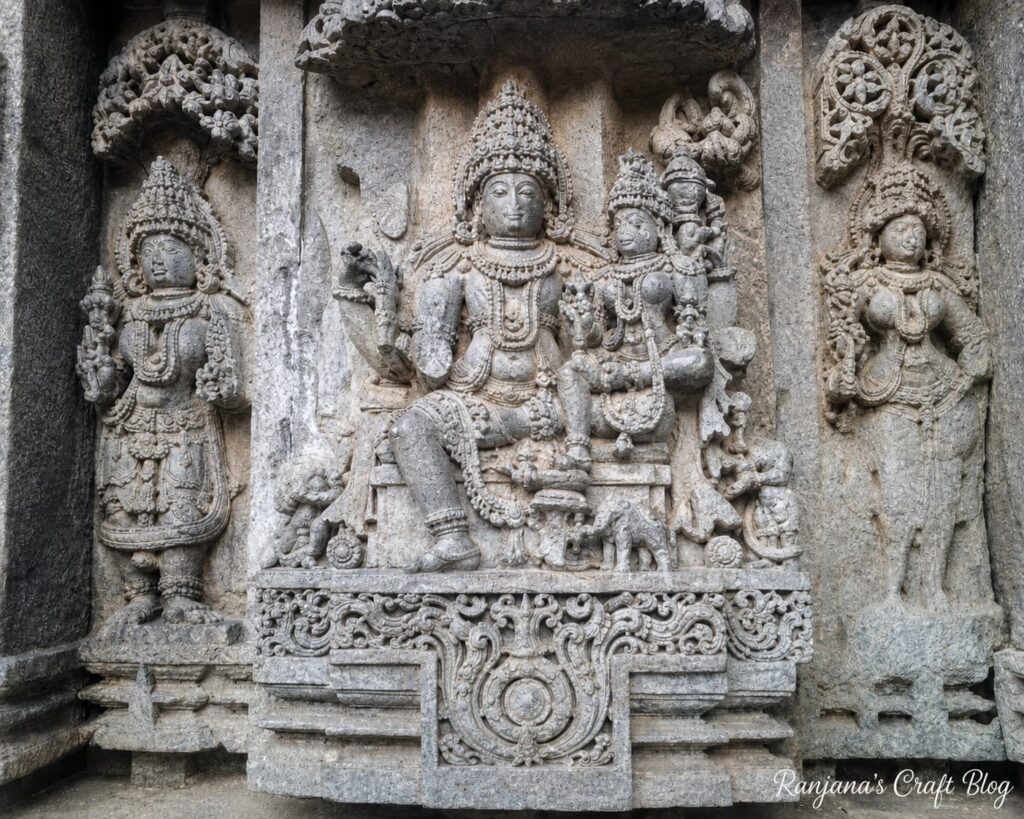
Lakshmi is sitting on Vishnu’s lap and her right foot is on a lotus.
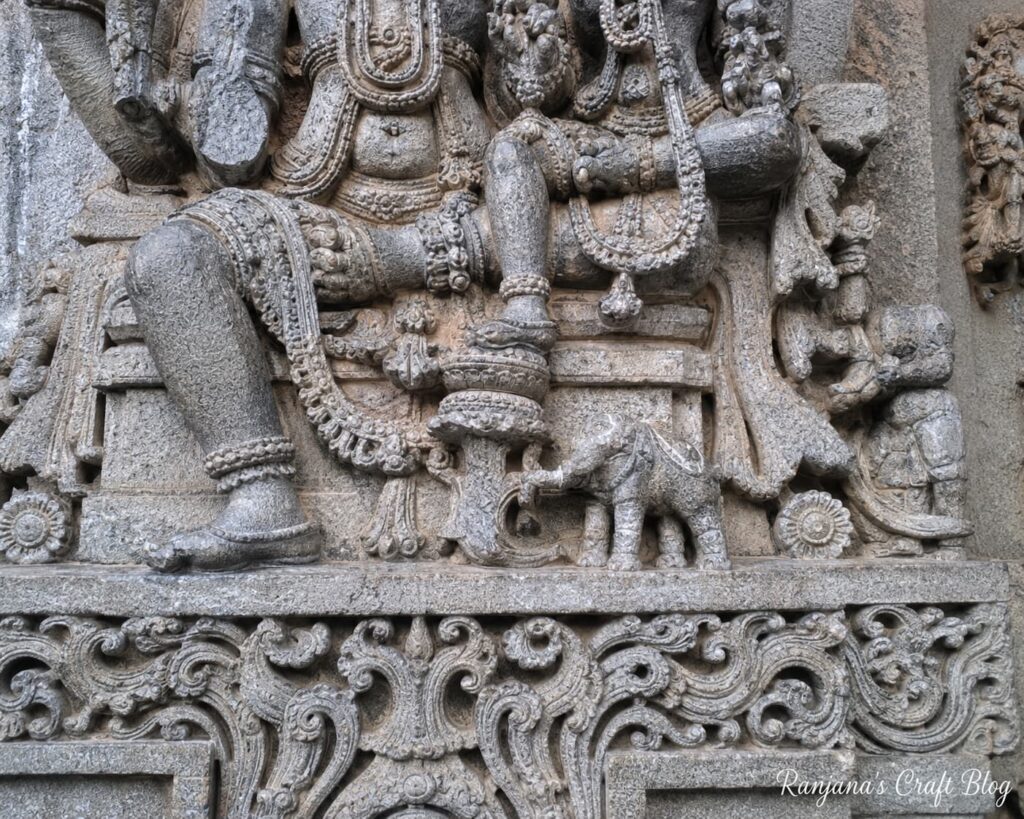
The closer view
If you look closely at the sculpture, you will notice an elephant supporting the lotus on which Goddess Lakshmi is seated. This unique detail immediately caught my attention, so I asked our guide about its significance.
The guide shared an interesting interpretation. According to him, “The divine energy and glory of Goddess Lakshmi are so immense that the lotus bends under her presence. The elephant is shown supporting the lotus.”
I was truly fascinated by this explanation. What a beautiful imagination! It made me wonder whether this symbolism originated from the master sculptor himself or whether someone else described the concept and the sculptor transformed it into stone.
As an artist, I know how difficult it is to convert another person’s imagination into a work of art. Every artist naturally adds their own creativity, emotions, and interpretation to the process. Did the sculptor conceive this symbolism himself, or was he bringing someone else’s vision to life? And if it was the latter, was the person who imagined it completely satisfied with the final creation?
I may never know the answer, but perhaps that is one of the reasons Hoysala sculptures continue to inspire curiosity even after so many centuries. What do you think?
amazing!
Yes, its really amazing!